SWFL Yard Signs / How we print
There are two ways to put a design on a sign. One of them fails in Florida within a year, and it is the one most shops use because it is cheaper for them. Here is the difference and how to tell which one you are being sold.
Single-sided 24×18, metal stakes included. The both-sides price is shown under every tier, so you can total a double-sided order without asking.
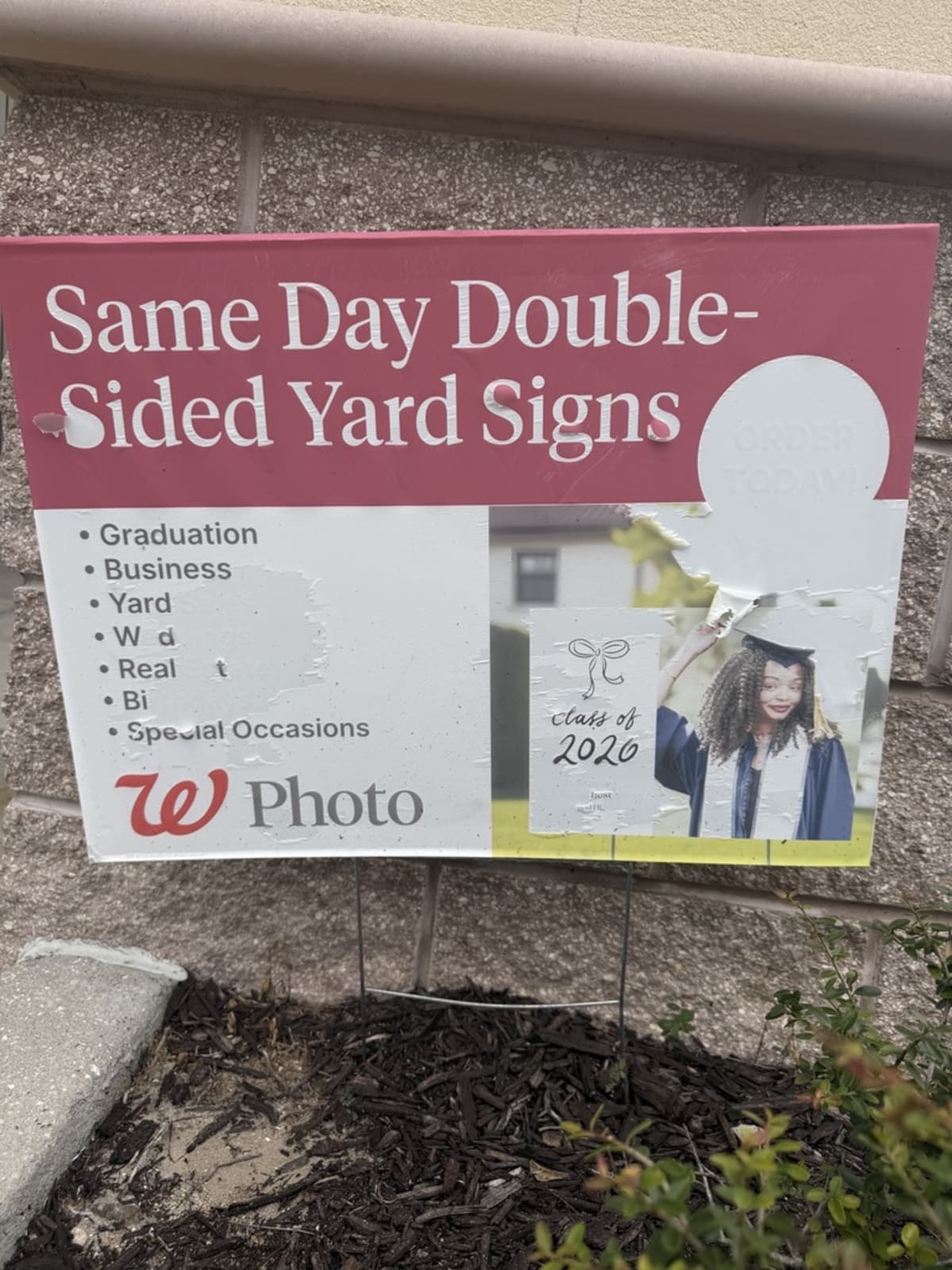
Vinyl on a board. The design is printed on adhesive vinyl, usually laminated, then applied by hand to a blank sheet of coroplast or aluminum. It is what most quick-print and franchise sign shops do, because one roll printer covers every product.
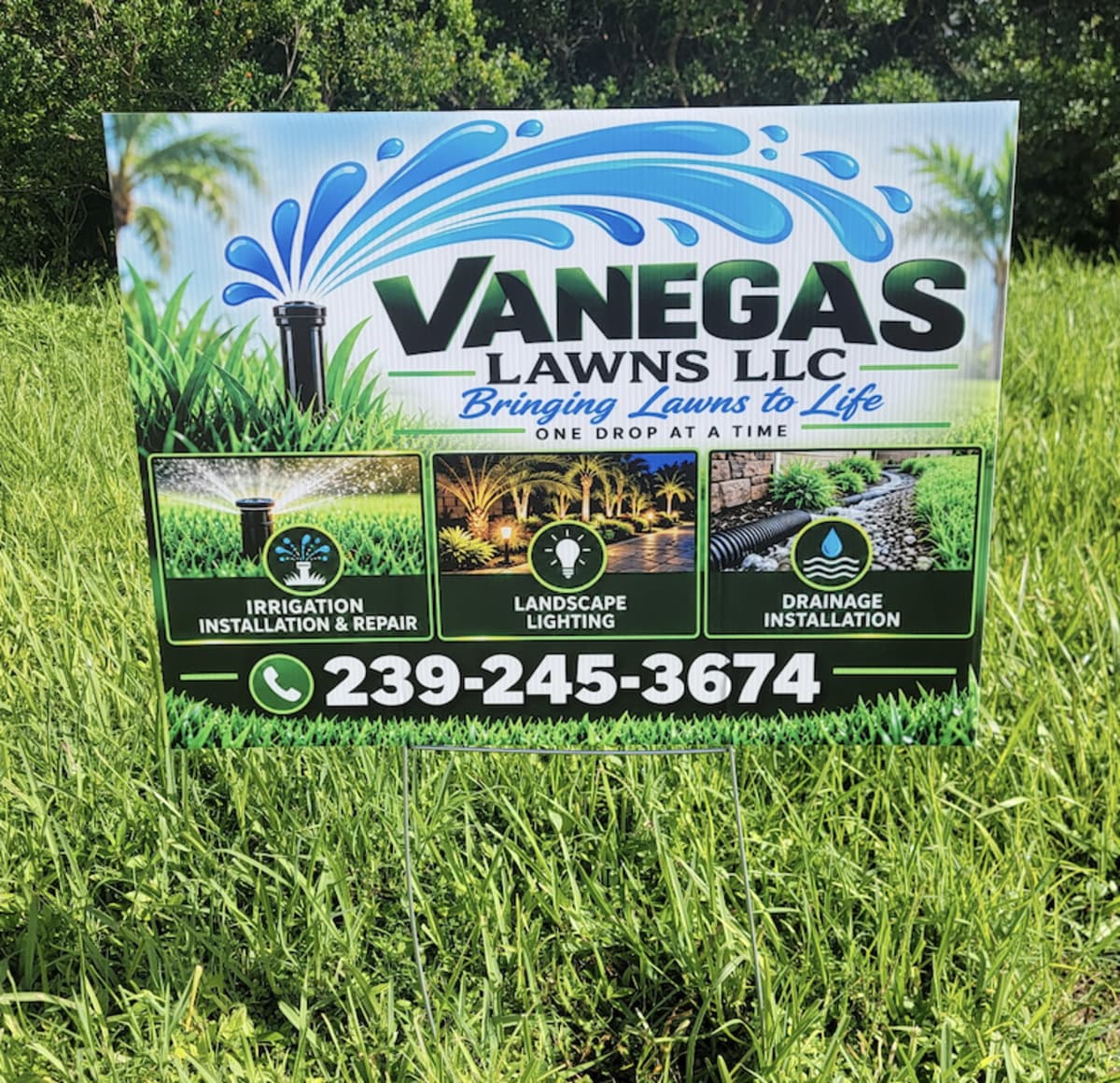
UV printed into the board. The blank goes onto a flatbed, the ink is printed directly onto it and cured hard by UV light before it leaves the machine. There is no vinyl, no adhesive and no laminate. The image is the surface.
From across a parking lot on day one they look identical. The difference shows up in August.
None of this is a defect in the vinyl. It is what adhesive does in a place where the dashboard hits 140 degrees.
Anything curved, anything on glass, anything on a vehicle, and anything you want to remove cleanly later. Reflective signs are a vinyl sheeting by definition. We do those too, and we will tell you when one of them is the better answer for the job.
Every coroplast yard sign under 50, every aluminum job site and community sign, PVC and acrylic panels, and the odd things people bring in: golf balls, tumblers, phone cases, awards. If it is flat or close to flat and fits on the bed, it prints direct.
Orders of 50 and up go to our trade printer, which also prints coroplast direct on flatbed equipment. You get the same construction at either quantity.
The ink is printed straight onto the sign material and cured hard with UV light in the same pass. There is no vinyl, no laminate and no adhesive between the image and the board. Coroplast, aluminum, PVC and acrylic all print this way on our flatbed.
A vinyl sign is a printed sticker applied to a blank board. Florida heat softens the adhesive, humidity gets under the edge, and the top laminate and the vinyl beneath it expand at different rates. The edge lifts, then frays, then the panel starts to bubble. A direct-printed sign has no edge to lift because the ink is part of the surface.
Run a fingernail along the edge of the printed area. Vinyl has a step you can feel where the sticker ends. A direct-printed sign is flat to the edge of the board, and on coroplast you can see the ink sitting in the flute texture rather than a smooth film over it.
Yes. Vehicle graphics, window lettering, curved surfaces and anything that needs to be removed later should be vinyl. So should reflective signs, which are a vinyl sheeting by definition. For a flat sign that stays outdoors, direct print is the better product.
Tell us what the sign is and how long it needs to last. We reply with confirmed pricing and a real pickup date, usually within the hour during business hours.